First impressions
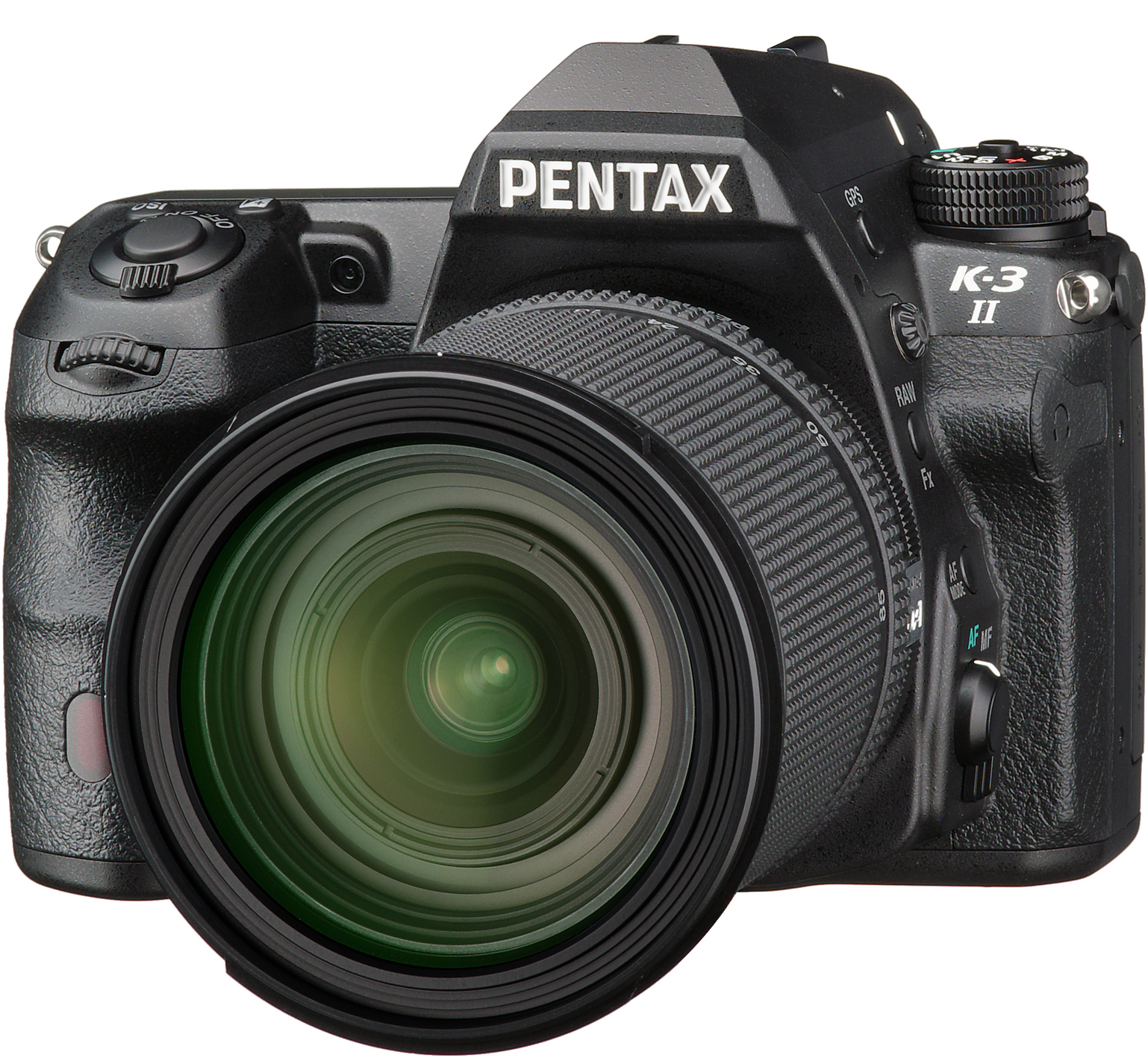
I nabbed a used
K-3 ii about three months ago on eBay. I got lucky. At 450 euros it was a bit
of a steal, including a spare battery and 16GB flu card. It had one flaw, a perforated
tripod socket, which basically meant there was a hole in the bottom of the
camera. Not good for the much-loved weather sealing, but get-aroundable by
keeping a quick release plate plugged in. Seeing as I always do that anyway, I
could live with that.
I was
upgrading from a K-5 IIS, a camera which is very able and durable with great
picture quality. I drowned my first one in the sea. A week later, it dried out,
and worked fine! However, the K-3 ii just had some (to my mind) knockout
features that I was yearning to try out.
The body
shape is rather similar, with some layout changes, shifting the AF-on button to
a more suitable spot. On the K-5 I had to poke myself in the right eye if I
wanted to use it. But the real nice improvement came when I fired the shutter.
It has a gorgeous, smooth, luxury feel to it. Hard to describe, but a neutral
experience on the K-5 has become a pleasurable one.
Overall,
the same high quality, tough, magnesium alloy build quality is apparent. Best
in class, perhaps. At the price point I don’t know of a rival brand which
provides this standard of quality. Of course, enjoying the physical experience
of a camera is important, but not as important as what you can do with it.
Here’s a rundown of its standout features.
GPS & Astrotracer
Pentax took
out the flash from the predecessor K-3, instead giving it a GPS. Now, some
people will miss the flash. If you do, you can still get the K-3, but for me,
the GPS was compelling and this is why. Knowing a precise shooting location is
great, particularly if you travel a bit. I do, and am forever forgetting where
my shots were taken. Even more than that, Pentax had cannily adapted the GPS
technology to create Astrotracer. Astrotracer is an ingenious way to track the
stars for astrophotography, to avoid star trails.
It does
this in combination with the sensor stabilisation system, which actually moves the
sensor to maintain a fix on a section of the sky. Clever! The length of exposure
you can obtain with this depends on the lens focal length you use, but three or
four minutes is typically achievable. This makes a huge difference as it allows
you to use lower ISO and narrower apertures for your star shots.
If you’ve
tried night sky photography you will be aware that you typically have to shoot
at 1600 ISO or higher to get a decent exposure, and this entails lots of noise,
which degrades your picture. With Astrotracer, decent quality astrophotography
is within reach of mortals.
SR – Shake Reduction (in body
image stabilisation)
This has
been around for a while in Pentax bodies, but with the K-3 ii comes the best
iteration of the system so far. Pentax officially claim you gain 4.5 stops of
exposure, hand holding with SR on. Now, I have used Olympus cameras and I have
to say their 5-axis IBIS system is terrific. I believe the Pentax system is
3-axis, and is to my mind somewhat inferior. Not that it’s bad. It’s a
wonderful thing. I can slap on a 30 year old M series lens and have it stabilised.
That’s amazing! And you don’t have to fork out a fortune for new stabilised
lenses, like you do with some other systems.
Sadly
though, something I hadn’t realised is that in the Pentax, the mechanical SR
system is switched off for video. You are stuck with a digital SR, which is so
jerky I have to say I prefer not to use it. On the Olympus EM-5 you get your
mechanical 5 axis system for video and it works like a dream. Like an invisible
steadycam. So, that’s a little bit of a disappointment, and one of the reasons
I conclude the K-3 ii is not really an ideal video camera. It’s there if you
need it, but you probably wouldn’t try to do any pro work with it.
One last
point to mention on the SR, is that the K-3 ii automatically disables the SR
when you go into self-timer mode. You don’t want SR on when you are on a
tripod, so that’s really well thought out.
Pixel Shift Resolution
Also
ingeniously using the SR system is a new feature called pixel shift resolution.
A similar system is also offered by the latest Olympus cameras. The way it
works is to take four photos in sequence when you fire the shutter (keep it on
a tripod), and between each frame, the sensor is shifted by the diameter of one
pixel (don’t ask me how) in three different directions. The effect of this is
to gather 3-colour (RGB) data for each pixel in the final image.
As you
probably know, Bayer type sensors normally only collect either red or green or
blue light on each pixel, which then has to be processed by some digital
guesswork, creating a less than perfect final image.
The pixel
shift images not only give better colour accuracy to a shot, but somehow boost
the resolution and micro contrast, providing a much more pleasing quality
picture, somewhat akin to what the (much beloved) Foveon sensors can create.
The final image is the same pixel dimensions as regular images, but is somewhat
bloated in size. And here lies the first gotcha of the system.
The only
way to actually access the high resolution image is to use Pentax’ proprietary
version of Silkypix image processing software (called Digital Camera Utility).
And it’s awful. Really not a good experience to use. This is needed as in fact
what is happening is the actual image combination is happening in the computer
and not in camera. The PSR files produced are in effect parcels of 4 images,
which have to be squashed together and merged in post. So far, none of the big
image cataloguing and RAW conversion programs support it, so you’re stuck with
the Digital Camera Utility. The awesome Sigma Foveon images suffer a similar
fate, as they also cannot be processed except by Sigma’s similarly awful
proprietary software. No such thing as a free lunch…
The second
gotcha is that the nature of the process requires a static subject in order to
work. If you use it on anything moving noticeably – a human, a cloudy sky, or a
sea, it doesn’t work very well, creating artefacts and “zippering”. So, it’s
best used for landscapes on very still days, macro work, and controlled still
life photography. I have seen portraits done with it. I suspect you’ll need a
very still model, lots of light and very fast shutter speeds to make it work. I
haven’t tried that yet myself.
This said,
if you use it within its parameters, and can be bothered to go through the
somewhat irksome post-processing, this can produce some absolutely beautiful
pictures, that can exceed quality from full frame cameras, though in my view,
falling short of medium format.


15mm, f/8, 75 sec, 6 stop ND filter
HDR
Similar to
the pixel shift feature is the high dynamic range function (HDR). This
similarly works by taking a selection of shots (this time three) and then
combining them to balance for highlight and shadows, preventing loss of detail
at the extreme of exposure. It only works in jpg, and again, usually requires a
tripod. I have managed to use it handheld, but it’s a little hit or miss.
Obviously you need a fast shutter, and a steady hand. The SR helps.
The Flu Card
I sometimes
get the impression Pentax are working from a rented basement somewhere and
struggling to pay the staff. This shows in some of the corners they sometimes cut.
Point in question, the flu card.
Wi-fi has
been around for a few years now. It’s useful for wirelessly downloading files
to computer, as well as controlling the camera remotely via tethering.
Tethering is something that has been wanting in the Pentax range since they
inexplicably ditched it a few years ago, something that happens to be one of
the main reasons the brand gets overlooked by large swathes of the professional
photographer crowd.
The Flu
card attempts to replace the more traditional camera wi-fi with a wi-fi enabled
SD card. It looks much like any other SD card of 16GB, but has the circuitry to
talk to your computer on its own network. Switching it on is the first
challenge since the control is set deep inside the menu system, hard to find.
Wait a while and select the wi-fi network as it appears on your computer.
Then, you
go into Safari, yes the web browser, and key in the http address given. There
you can access control of the camera and a list of transferred files. Apart
from the control layout being rather slow and clunky, I was gobsmacked to find
out it can only transfer jpg files. No RAW! You can set the camera to save both
the RAW + Jpg and go and find your RAW later, but that’s two steps in a process
that should require only one. I want my tethering in RAW and I want it now!
So, in the
end, as a means of file transfer without cables, the flu card is useless. As a
means of remote tethering and importing, it’s very disappointing. I truly hope
Pentax will get their act together on tethering as it’s really holding them
back.
Dual card slots
And this is
the other oversight of the camera and it’s really only a small niggle. Having
dual card slots is great. You have the option to write RAW on one, Jpg on the
other, or write on one, back up on the other, or use one till it’s full, then
switch to the other in series. For paid work or other hard to get shots, it is
most reassuring to have a backup, or alternatively a massive storage potential
at hand.
What
bothers me is this. If you take one card out (say from slot 1) to download you
pictures, and switch the camera on again before replacing the card, when you
finally put it back in you will find that you are now recording to card 2 first.
You can’t switch it back (even with the dedicated button for switching between
the two slots which only works in playback mode – go figure). You will now have
to switch off, remove card 2, switch on again, switch off again, replace card
2, and switch on again – all the while glaring bemusedly at the little card
switching button on the back. Come on Pentax, that should have been obvious. I
await a firmware solution.
8.3 fps
A fast
drive speed is essential for any kind of action photography. I am fond of
shooting water sports and cycling, so for me it’s a great bonus. I find I am
mostly in the hi speed drive mode, and it’s great. A modest improvement from my
K-5 iiS, but welcome nonetheless, and really unrivalled at the price point. The
only weird thing I’ve noticed is when I attach an M series lens. Then top speed
drops to about 4 fps. I am still scratching my head. No idea why…
Other observations
The AF is
not the best in class, but with the right Pentax lens it’s pretty good. I have
found that my particular sample requires an AF fine adjustment of +6, for any
AF lens I attach. That’s an individual camera calibration problem, and I cannot
speak for the rest of the cameras out there. Luckily the fine adjustment option
exists. There is a tracking option, but it only works in live view.
Coming from
the K-5 IIS the control layout is not so different. The essential controls:
ISO, WB, exp. comp. and exposure control are all easily accessible and become
second nature very quickly. The AF-on button is in a much more comfortable
place and I soon found I could mostly operate the camera’s controls just by
touch.
Tucked away
in the menu is a selection of useful little features that I have grown to like.
Such as the peripheral illumination correction (another way of saying fix
vignettes). Another is distortion correction, which actually addresses the
problem of barrel and pincushion distortion that affects many lenses. These two
functions only work with Pentax branded lenses.
Not having
an anti-aliasing filter in front of the sensor, the K-3 ii offers an ingenious
alternative to the problem of moire and aliasing. Again, using the SR system, a
digital AA filter emulator is provided which actually microscopically vibrates
the sensor to generate blur. I have never used it, but if you shoot lots of
grill patterns and textiles, it could be useful!
Conclusions
I can
safely say the K-3 ii is overall probably the most capable camera I have ever
used and definitely the best bang-for-buck. Perhaps not the most enjoyable or
the most advanced, but it covers a whole slew of applications without being
compromised.
The K-3 ii
can happily shoot a sports event in the morning, product photography in the
afternoon and then the stars in the evening. Come back again the next day and
it will do well for a wedding and a hike in the mountains.
Perhaps it
wouldn’t be my camera of choice for candid photography (the little Fuji X100
series excels at that) or flash and studio photography. The 1/180 sync speed I
find a little slow, and it seems odd to me that Pentax are not yet incorporating
some kind of built-in wireless flash command in their cameras. As it stands I
have to use an external transmitter and receiver system as go between with
external flash. Ho hum.
The K-3 ii
came from the time when here was a fashion for “pro” spec cameras to have flush
monitor screens. Happily this is changing and the new K-1 and KP both have
tilting screens. I love tilting screens. They’re great for getting low down
shots, macro work, and generally saving one’s knees and back.
The great
|
The not so great
|
·
8.3 fps
·
GPS
·
Astrotracer
·
SR with any lens
·
Pixel shift resolution
·
Control layout
·
Tough build
·
Image quality
·
DNG files
|
·
No SR in video mode
·
Proprietary software
·
Flu card
·
Menus
·
No wireless flash trigger
·
1/180 flash sync
·
Non-tilting screen
|
But the two
main areas I see that are in need of improvement are the pixel shift
resolution, which desperately need a more streamlined software implementation,
and the flucard wireless tethering option, which falls short of being really
useful.
I have no
doubt that Pentax will eventually get around to improving these areas. If Nikon
is a Typhoon and Canon is an F-22, Pentax is an SU-27. They are a brand known
for producing rugged, high-specced cameras at a price no-one else can seem to
compete with, but that fall behind somewhat in the areas of flash and AF. They
are also innovative, incorporating ingenious functions that few others have
come up with. I love their multiple uses of the SR system. Clever.
I don’t
really prioritise video, and neither does Pentax. The AF during recording is
pretty awful and the mechanical SR doesn’t work. If you’re on a tripod and you
don’t mind pulling focus manually, it’s fine.
Recommendations
This camera
is available now at great prices both new and used. The replacement is expected
later in 2017 so expect prices to drop a little more as stock is cleared. You
won’t find a Canon or Nikon to touch it for the same money. Can I recommend it?
Yes, heartily, if your interests are sports/action, documentary, outdoors,
stars and still life. Not so much for candid, macro or creative flash work. For
video there are better options.

No comments:
Post a Comment